A veterinary working interview is a trial shift, usually half a day to a full day, where a candidate works alongside the practice team so both sides can judge the fit. If the candidate does real work for the practice, such as restraining patients, running lab work, or checking in clients, federal wage law generally treats that time as work, and it should be paid.
Working interviews are common for vet techs, assistants, and client service staff, and many practices use a version of them for veterinarians too. They're useful. They also cause more confusion than any other step in veterinary hiring, mostly about pay. This guide covers both sides: what candidates should expect and ask, and how practices can run one that's fair, legal, and actually tells them something.
What happens during a working interview
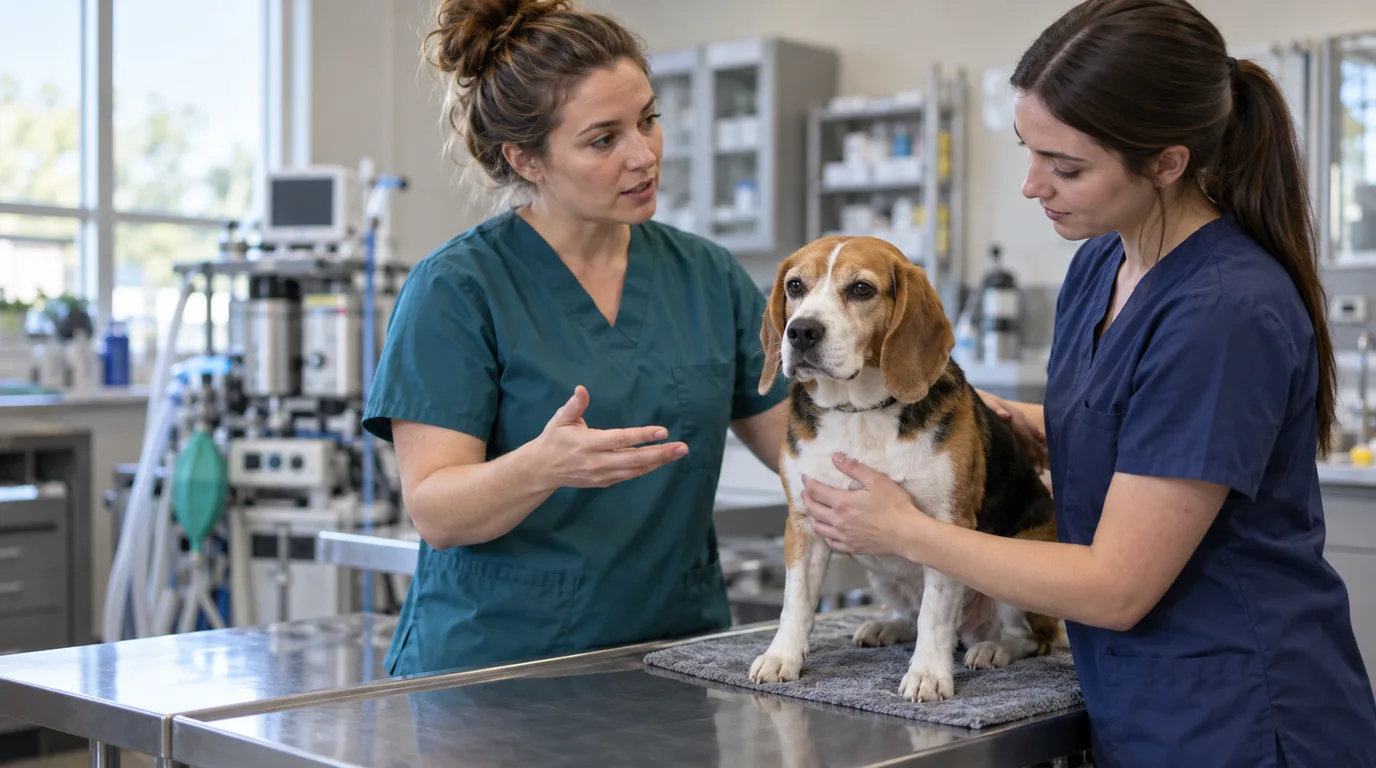
The format varies by practice and role, but most follow the same pattern. You arrive in scrubs, get a short tour, and spend the shift paired with someone in the role you applied for. Somewhere in the day, usually at the end, you sit down with the practice manager or medical director.
What you'll do depends on the job:
- Vet techs usually help in treatment and surgery: restraint, catheter placement, blood draws, running in-house lab work, setting up for procedures, and watching anesthesia alongside an experienced tech.
- Veterinary assistants tend to work restraint, kennel care, room turnover, cleaning and stocking, and sterilizing instruments.
- Receptionists and client service staff shadow check-in and checkout, answer phones with someone listening, and learn the practice software.
- Veterinarians often spend the day with an associate or the medical director, seeing appointments together or discussing cases, rather than taking their own schedule. A veterinarian has to hold a license in the state where they practice (BLS), so a candidate from out of state usually can't treat patients until they're licensed there.
Expect the team to watch how you handle animals, how you talk to clients, whether you ask questions when you don't know something, and how you get along with the people you'd work next to. The team will talk about you after you leave. Being easy to work with counts for a lot.
Does a working interview have to be paid?
If you're working, usually yes. Under the Fair Labor Standards Act, work that an employer "suffers or permits" is generally hours worked, and it has to be paid at least minimum wage (U.S. Department of Labor). Calling the shift an "interview" doesn't change what the person is doing. A candidate who restrains patients, cleans kennels, or runs a CBC for your hospital is doing work that benefits the practice.
A true observation visit is different. If you come in business casual, tour the hospital, watch a surgery from the doorway, and talk with the team, most people wouldn't call that work. The line gets crossed when you're asked to put on scrubs and do the job.
A few things make this murkier in practice:
- State law can add requirements on top of federal law, such as a higher minimum wage or rules about how quickly you must be paid.
- Some practices pay a flat amount for the shift or pay less than the posted rate for the job. Whether that's enough depends on the hours and your state's minimum wage.
- Multi-day unpaid "trials" are a red flag. Asking someone to work unpaid for a week or two goes well beyond an interview.
If a practice didn't pay you for a shift where you did real work, you can raise it with them first. If that goes nowhere, the Department of Labor's Wage and Hour Division takes confidential complaints at 1-866-487-9243, and your state labor department handles state wage claims.
This is general information, not legal advice. Wage rules depend on the facts and your state.
For candidates: how to prepare
Ask these questions before you go
A good practice will answer all of these without hesitation:
- Is the working interview paid, and at what rate?
- How long is it, and what time should I arrive?
- What will I be doing? Will I be hands-on or observing?
- Who will I be working with?
- What should I wear and bring?
- Will I get time to talk with the techs (or doctors) without a manager present?
If the answer to the first question is vague, ask again in writing. It's a reasonable question, and how they answer tells you something about how they'll treat you as an employee.
What to bring
- Clean scrubs and closed-toe shoes you can stand in all day
- A watch with a second hand, a stethoscope, and a pen
- A copy of your resume, and your credential or license number if you have one
- Lunch and water, unless they've told you lunch is provided
What to do on the day
Do what you're comfortable doing, and say so when something's new to you. "I've placed cephalic catheters in dogs but not many in cats. Can I watch one first?" goes over far better than a missed stick on a fractious cat you weren't ready for. Nobody expects you to know their hospital's layout, software, or protocols after four hours.
Help without being asked when you can. Clean a table, restock a room, walk a dog. Introduce yourself to the receptionists as well as the doctors. People notice.
What you should be watching
You're interviewing them too. Watch for:
- How doctors talk to techs and assistants, especially when something goes wrong.
- Staffing. Count the techs and assistants per doctor. Is everyone running, or is the pace steady?
- Anesthesia. Is there a dedicated person monitoring every anesthetized patient, and what equipment do they use?
- Turnover. Ask the techs how long they've been there. A team where most people started in the last six months tells you something.
- Whether you get to talk to staff alone. A practice that won't let you do this may have a reason.
For more questions worth asking, see our vet tech interview questions guide.
Afterward
Send a short thank-you email the same day to the person who organized the shift. Mention something specific from the day. If you haven't heard back within the timeline they gave you, a polite follow-up is fine.
For practices: how to run a working interview
A well-run working interview is one of the best hiring tools a practice has. A badly run one costs you candidates, and an unpaid one exposes you to wage claims.
Put the candidate on payroll for the shift
The cleanest approach is to hire the candidate as a paid, temporary employee for the working interview. That means the usual new-hire paperwork, including a Form I-9, which employers must complete for everyone they hire (USCIS). Some practices handle this through a staffing arrangement or a short per diem agreement instead.
Paying them also matters for injuries. Bites and scratches are an everyday hazard in a veterinary hospital. Workers' compensation is built around employees, so ask your carrier whether a candidate who isn't on payroll would be covered if a patient bit them. Don't assume they would be.
Keep the scope reasonable
- Half a day to one day is enough. You'll learn most of what you need in a few hours.
- Don't put a candidate in charge of anesthesia in an unfamiliar hospital with unfamiliar equipment. Have them assist on a surgery day instead.
- Stay within your state's practice act. A tech credentialed in another state, or a veterinarian not yet licensed in yours, may not be allowed to perform some tasks in your hospital. Check with your state board.
Plan the day
Tell the candidate in writing what time to arrive, what to wear, what they'll be doing, who they'll shadow, and what you'll pay. Assign one "buddy" who's responsible for them all day. A candidate who spends the shift standing in a corner learns nothing about you and you learn nothing about them.
Decide what you're looking for, then write it down
Before the shift, agree on three or four things you're assessing, such as low-stress handling, how they talk to clients, whether they ask when unsure, and how they fit with the team. Have the buddy and one or two others write short notes before they compare impressions. It keeps one strong opinion from deciding the hire.
Let your team talk to them alone
Give the candidate 15 minutes with your techs without a manager in the room. Your techs' honest answers about workload and turnover will close more hires than any pitch, and if you're worried about what they'll say, that's worth knowing too.
Decide quickly
Give the candidate a timeline and stick to it. A good tech is usually talking to more than one practice. For the rest of the hiring process, from listing to offer, see how to hire a veterinary technician.
Quick answers
How long is a veterinary working interview? Usually four to eight hours. Anything longer than a day starts to look like a trial period, and should be treated and paid as employment.
Can a practice ask me to do an unpaid working interview? It can ask, but if you'll be doing real work, federal law generally requires pay. You can decline, or ask for pay as a condition of attending.
Do veterinarians do working interviews? Often, yes, though they tend to look more like a shadow day with case discussion than a full clinical shift. An unlicensed candidate generally can't practice in your state.
What if I realize during the shift that the job isn't for me? Finish the shift politely, thank them, and tell them your decision within a day or two. The veterinary world is small.
Next steps
Browse veterinary jobs on VeterinaryHire to find practices hiring near you. If you're hiring, post a job and say in the listing that your working interviews are paid. Candidates notice.
Sources
- U.S. Department of Labor, FLSA Hours Worked Advisor: suffer or permit to work and Wage and Hour Division: How to File a Complaint.
- U.S. Citizenship and Immigration Services, Form I-9, Employment Eligibility Verification.
- U.S. Bureau of Labor Statistics, Occupational Outlook Handbook: How to Become a Veterinarian.
- American Veterinary Medical Association, Applying and interviewing for a job.
This is practical guidance, not legal advice. Wage and hour law, workers' compensation, and scope of practice differ by state, so confirm the details with your employment advisor, insurance carrier, and state veterinary board. Sources checked September 28, 2026.